
Memmy
Local-first AI agent by Memmy with a self-evolving memory foundation, enabling desktop app, CLI, and external agents to share persistent long-term context.
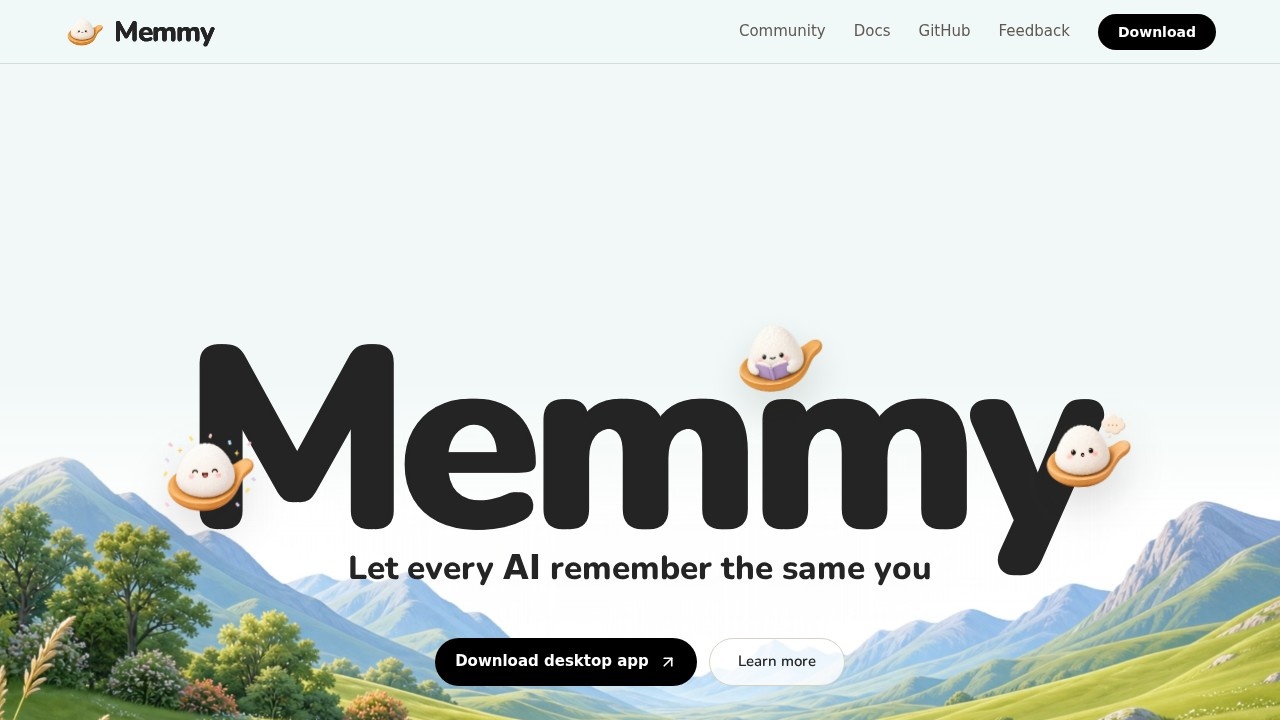
What is Memmy?
Memmy is a local-first AI agent that builds a self-evolving memory foundation from your AI tool interactions. It automatically scans conversation histories from tools like Cursor, Claude, and Codex, then organizes them into structured, searchable memory. Users rely on it to maintain persistent long-term context across different AI agents, so they never have to repeat preferences, decisions, or project details. It runs as a desktop app (macOS ARM64, Windows x64) and is free and open source.Application scenarios
Multi-tool AI workflow
Seamlessly switch between Cursor and Claude without losing project context, preferences, or technical decisions.
Task relay
Hand off tasks like merging plans or documenting weekly technical decisions from one agent to another.
Personal preference management
Keep your stylistic or coding preferences (e.g., "clean and restrained" design) remembered across all AI tools.
Project continuity
Continue unfinished work or discussions across different AI sessions without re-explaining context.
Collaborative memory sharing
Let external agents (beyond the desktop app and CLI) access the same persistent memory foundation.
Core Features
Automatic memory scanning
Memmy reads your local AI collaboration history (Cursor, Claude, Codex) and turns scattered conversations into structured memory.
Preference and decision tracking
It remembers what you said, what you decided, and what you care about—no need to repeat yourself next time.
Task relay across tools
When you switch from Cursor to Claude, Memmy carries your project context, preferences, and progress over automatically.
Agent capabilities
It's not just a memory manager—you can hand it tasks directly, like organizing material, merging plans, or continuing unfinished work.
On-demand memory injection
When you switch to any AI tool, Memmy delivers only the most relevant memory, not a full data dump.
Full local data storage
All memory data stays on your own device—never uploaded to any remote server.
Explicit authorization required
Memmy never reads or processes AI conversation history without your knowledge; every scan requires your explicit consent.
Granular access control
You decide which agent can use each memory and how much context is passed; you can view, delete, or turn off any source anytime.
Target users
- Developers and technical professionals who work with multiple AI coding tools (Cursor, Claude, Codex) daily and need persistent project context.
- Power users of AI assistants who want to maintain consistent preferences, decisions, and style across different agents.
- Open source enthusiasts who value local-first, privacy-respecting tools that evolve with community feedback.
How to use Memmy?
- Download the desktop app for macOS ARM64 or Windows x64 from the official website.
- Authorize Memmy to scan your AI tool conversation history (Cursor, Claude, Codex) on your device.
- Let it organize scattered conversations into structured memory—deduplicated, categorized, and searchable.
- Start using any AI tool—Memmy automatically injects the most relevant memory when you switch tools.
- Hand tasks directly to Memmy as an agent, or manage memory access and permissions in the app.
Pricing and free trial
Memmy is free and open source. The website mentions "MemmyGPT-5.6 Luna 2M tokens free trial" but does not provide clear pricing details for paid tiers beyond this trial.Effect review
Memmy addresses a genuine pain point for anyone juggling multiple AI tools: the constant need to re-explain context. Its local-first architecture ensures privacy while still enabling seamless context sharing across agents. The automatic scanning and structured memory organization are practical, though the actual accuracy of memory injection depends on how well it deduplicates and matches context. For developers and power users, this could significantly reduce friction in multi-tool workflows. The open-source nature and community involvement (GitHub, Discord, X) suggest active development and responsiveness to user feedback.Frequently Asked Questions
What is Memmy?
How does Memmy's memory work?
What platforms does Memmy support?
Is Memmy local-first?
Can Memmy integrate with other tools?
Is Memmy free to use?
Memmy - AI Tool Detail
Local-first AI agent by Memmy with a self-evolving memory foundation, enabling desktop app, CLI, and external agents to share persistent long-term context.
Category:Agents
Visit Link:https://memmy.bot/
Tags:AI agent、local-first、memory foundation、desktop app、context sharing