
Sonarly
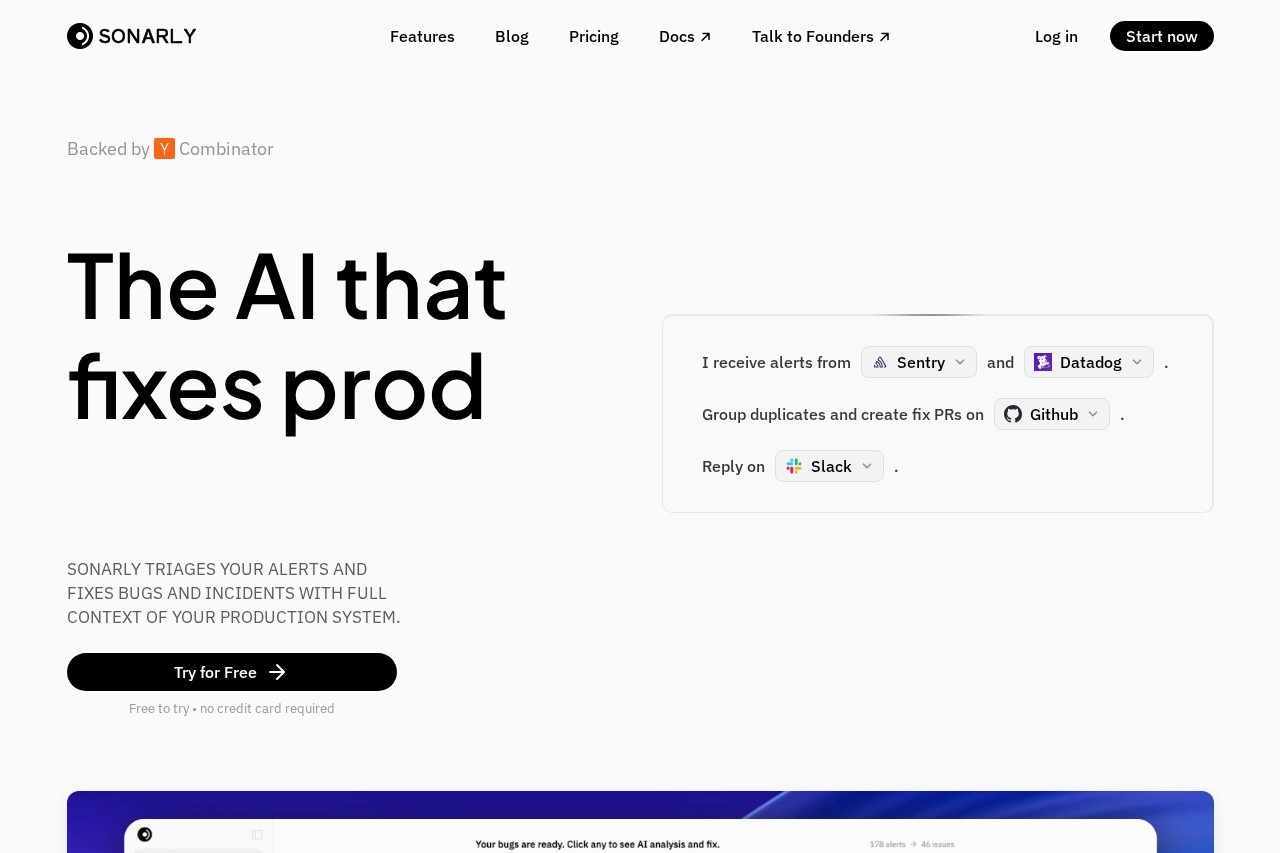
Sonarly is an AI-powered platform that automatically triages alerts and resolves bugs and incidents by leveraging the full context of your production system.
Sonarly: AI-Powered Alert Triage and Incident Resolution
Overview
In the high-stakes world of modern software operations, engineering teams are often inundated with a relentless stream of alerts, bugs, and system incidents. Manually sifting through this noise to identify genuine threats and root causes is a monumental drain on time, resources, and developer morale. Sonarly emerges as a transformative solution to this critical challenge. It is an advanced, AI-powered platform designed to autonomously triage alerts and resolve bugs and incidents by intelligently leveraging the complete context of your production environment. By moving beyond simple log aggregation, Sonarly acts as an intelligent analyst, correlating data across your entire stack to not only pinpoint what is broken but often to resolve it automatically, transforming reactive firefighting into proactive system management.
Key Features
Sonarly’s power is derived from a suite of sophisticated, interconnected features:
Full-Context AI Triage
The platform ingests and correlates data from logs, metrics, traces, deployment histories, and code changes. This holistic view allows its AI to understand the "why" behind an alert, dramatically reducing false positives and highlighting only actionable incidents.
Automated Incident Resolution
Sonarly doesn't just stop at identification. For a significant subset of common issues, it can execute automated remediation workflows, such as rolling back a problematic deployment, restarting a failed service, or scaling resources, often before human engineers are even alerted.
Intelligent Root Cause Analysis
When automatic resolution isn't possible, Sonarly provides a precise, context-rich diagnosis. It surfaces the likely root cause, impacted services, and related changes, cutting mean time to resolution (MTTR) from hours to minutes.
Seamless Ecosystem Integration
The platform is built to integrate natively with the tools you already use, including popular observability suites (Datadog, New Relic, Grafana), version control systems (GitHub, GitLab), and communication platforms like Slack and PagerDuty.
Continuous Learning Engine
Sonarly’s AI models continuously learn from your team’s actions and resolutions. Over time, its triage accuracy and remediation capabilities become finely tuned to your unique system's behavior and patterns.
Collaborative Workflow Hub
It provides a centralized workspace where incidents, associated context, and resolution steps are documented, fostering better collaboration between development, SRE, and operations teams.
Use Cases
Sonarly delivers tangible value across several critical operational scenarios:
Reducing Alert Fatigue for SRE/DevOps Teams
By filtering out noise and clustering related alerts into single, intelligible incidents, it allows engineers to focus on genuinely critical issues that require human expertise.
Accelerating Post-Incident Reviews
With a complete, AI-generated timeline of the event, root cause, and resolution, conducting blameless post-mortems becomes faster and more data-driven.
Enabling Proactive System Management
The platform’s ability to detect anomalous patterns and resolve common failures automatically helps prevent minor issues from escalating into full-blown outages.
Supporting On-Call Engineers
By providing immediate, rich context for every page, Sonarly empowers on-call staff to diagnose and resolve issues rapidly, even if they are not intimately familiar with the specific service.
Improving Development Velocity
By automatically linking production incidents back to specific code commits or pull requests, it provides developers with direct, actionable feedback to prevent regressions.
Technical Highlights
At its core, Sonarly utilizes cutting-edge machine learning models trained on vast volumes of operational data. It employs natural language processing (NLP) to understand log messages and alert content, and graph-based algorithms to map dependencies and trace causality across microservices. The platform operates with a strong emphasis on security and privacy, ensuring all data is encrypted in transit and at rest, with flexible deployment options to meet enterprise compliance requirements.
Advantages
Adopting Sonarly offers a compelling return on investment through several key advantages:
- Drastic Reduction in MTTR: Automate diagnosis and resolution to recover from incidents in minutes instead of hours.
- Enhanced System Reliability: Proactive and automated remediation leads to higher uptime and a more resilient application.
- Optimized Engineering Resources: Frees your most valuable talent from tedious alert monitoring to focus on strategic, innovative work.
- Data-Driven Operational Insights: Gain unparalleled visibility into system weaknesses and failure patterns to guide infrastructure and code improvements.
Who Should Use It
Sonarly is an essential platform for Site Reliability Engineering (SRE) teams, DevOps engineers, and platform engineering groups at technology-driven companies of all sizes. It is particularly impactful for organizations running complex, distributed systems (e.g., microservices architectures) where manual incident management has become a bottleneck to reliability and growth. Engineering leaders seeking to improve operational efficiency, system resilience, and team well-being will find immediate value in deploying Sonarly.
Sonarly - AI Tool Detail
Sonarly is an AI-powered platform that automatically triages alerts and resolves bugs and incidents by leveraging the full context of your production system.
Category:Training Deployment Tool
Visit Link:https://sonarly.com/
Tags:incident management、AI triage、bug resolution、production monitoring、alert automation