
LightPDF
LightPDF offers AI-powered cloud services for viewing, editing, converting, signing, and managing PDFs, helping users solve all their document problems easily.
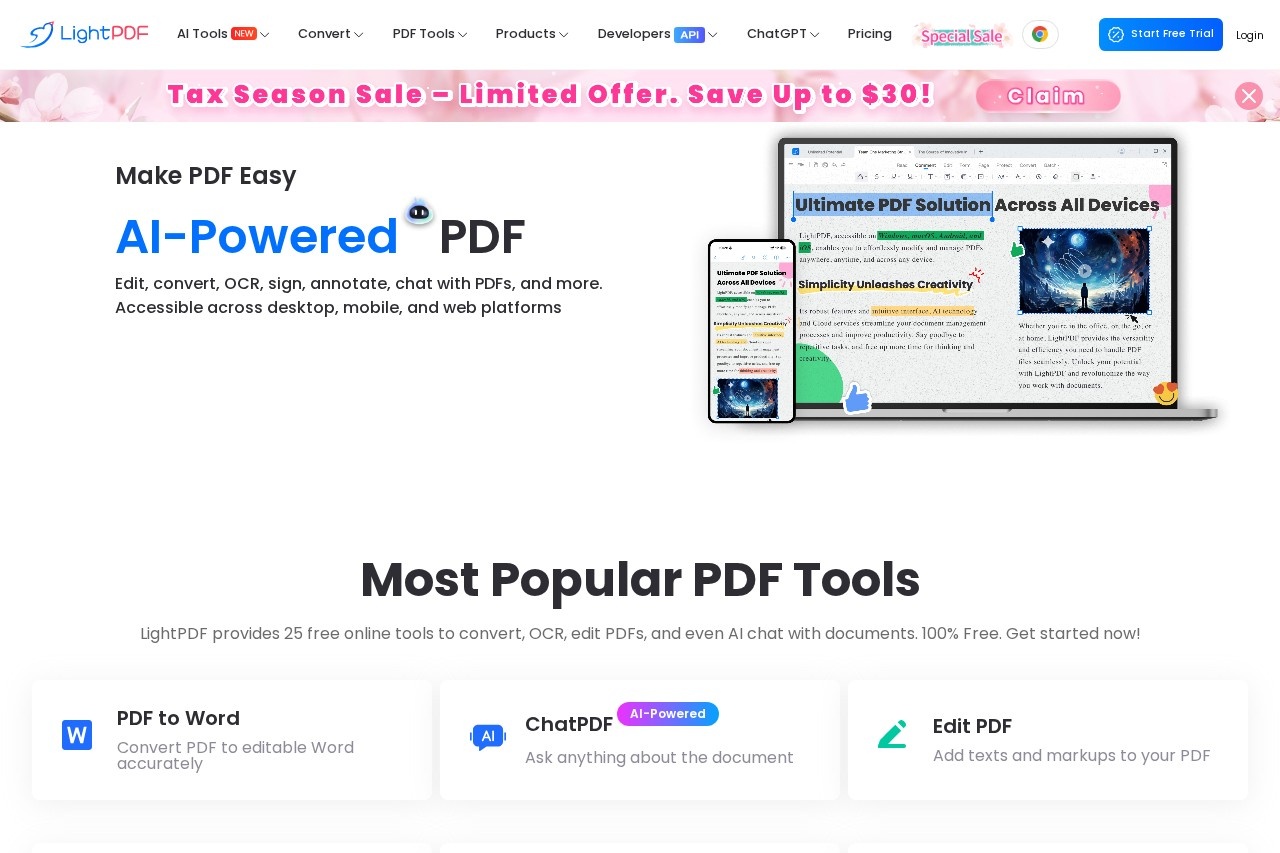
LightPDF Review: An AI-Powered PDF Swiss Army Knife
What is LightPDF?
LightPDF is a cloud-based platform that leverages artificial intelligence to provide a comprehensive suite of PDF management tools. It positions itself as a one-stop solution for handling virtually any document-related task, moving beyond simple viewing to encompass editing, conversion, and secure signing. By operating in the cloud, it offers accessibility from any device with a web browser, aiming to streamline document workflows that are often fragmented across multiple applications.Application Scenarios
The tool is designed for real-world document friction points. Common use cases include professionals needing to quickly edit a contract clause without expensive desktop software, students compiling research from various formats into a single PDF, or remote teams requiring legally valid electronic signatures on project approvals. It’s also practical for administrative tasks like converting scanned documents into editable Word files, compressing large PDFs for email, or organizing and securing a portfolio of sensitive documents in the cloud. Essentially, any scenario where a PDF is the starting point, obstacle, or deliverable is a potential fit for LightPDF.Main Features
While specific features aren't enumerated here, the description outlines a broad, AI-integrated feature set centered on core PDF manipulation. The service fundamentally provides viewing for reading and navigating documents. Its editing capabilities suggest users can modify text, images, or pages directly. The conversion function is key, likely supporting two-way conversion between PDFs and formats like Word, Excel, PowerPoint, and images. The inclusion of signing indicates a built-in electronic signature tool for securing agreements. Finally, managing implies organizational features, which could involve merging, splitting, compressing, protecting with passwords, or annotating documents. The integration of AI presumably accelerates or enhances these tasks, such as through smart form recognition, improved OCR accuracy, or automated document processing.Target Users
LightPDF casts a wide net, targeting anyone who regularly works with digital documents. This naturally includes office professionals, freelancers, and small business owners who handle contracts, reports, and invoices. Students and academics benefit from its conversion and editing tools for research papers and theses. Legal and real estate professionals, who manage document-heavy processes, would find value in the signing and editing suite. Its cloud-based nature makes it particularly appealing to remote and hybrid teams needing collaborative document handling without local software installs. Essentially, it’s for users seeking an accessible, all-in-one alternative to piecemeal solutions or costly professional desktop software subscriptions.How to Use LightPDF?
Using LightPDF appears straightforward, typical of modern SaaS tools. Users likely visit the website and upload a document directly from their computer, cloud storage like Google Drive or Dropbox, or via a URL. The platform’s interface probably presents a clear dashboard or tool selector for choosing the desired action—be it "Edit," "Convert," "Sign," etc. After selecting a tool, users would follow contextual steps; for example, highlighting text to edit, choosing an output format for conversion, or placing signature fields on a contract. Processed files are presumably available for download or saving to the user’s cloud account. The AI components likely work in the background, automating tasks like format detection or data extraction. The promise of solving document problems "easily" suggests a focus on intuitive design with minimal learning curve.Frequently Asked Questions
What is LightPDF?
LightPDF is an AI-powered cloud service for viewing, editing, converting, signing, and managing PDF documents.
Is LightPDF free to use?
LightPDF offers both free and premium plans with varying features for different user needs.
What PDF editing features does LightPDF provide?
LightPDF allows you to edit text, add annotations, insert images, and apply watermarks to PDF files.
Can I convert PDFs to other formats with LightPDF?
Yes, LightPDF supports converting PDFs to formats like Word, Excel, PowerPoint, and images, and vice versa.
How does LightPDF ensure document security?
LightPDF uses secure cloud storage and encryption to protect your documents during processing and storage.
Does LightPDF support electronic signatures?
Yes, LightPDF includes tools for adding and managing electronic signatures on PDF documents.
LightPDF - AI Tool Detail
LightPDF offers AI-powered cloud services for viewing, editing, converting, signing, and managing PDFs, helping users solve all their document problems easily.
Category:Document processing
Visit Link:https://lightpdf.com/
Tags:PDF editor、document management、AI conversion、cloud PDF、digital signature