zopnight
zopnight by zop.dev schedules cloud resources to power down during idle periods and right-sizes remaining instances, cutting non-production costs by 70% across AWS, GCP, Azure, and K8s.
What is zopnight?
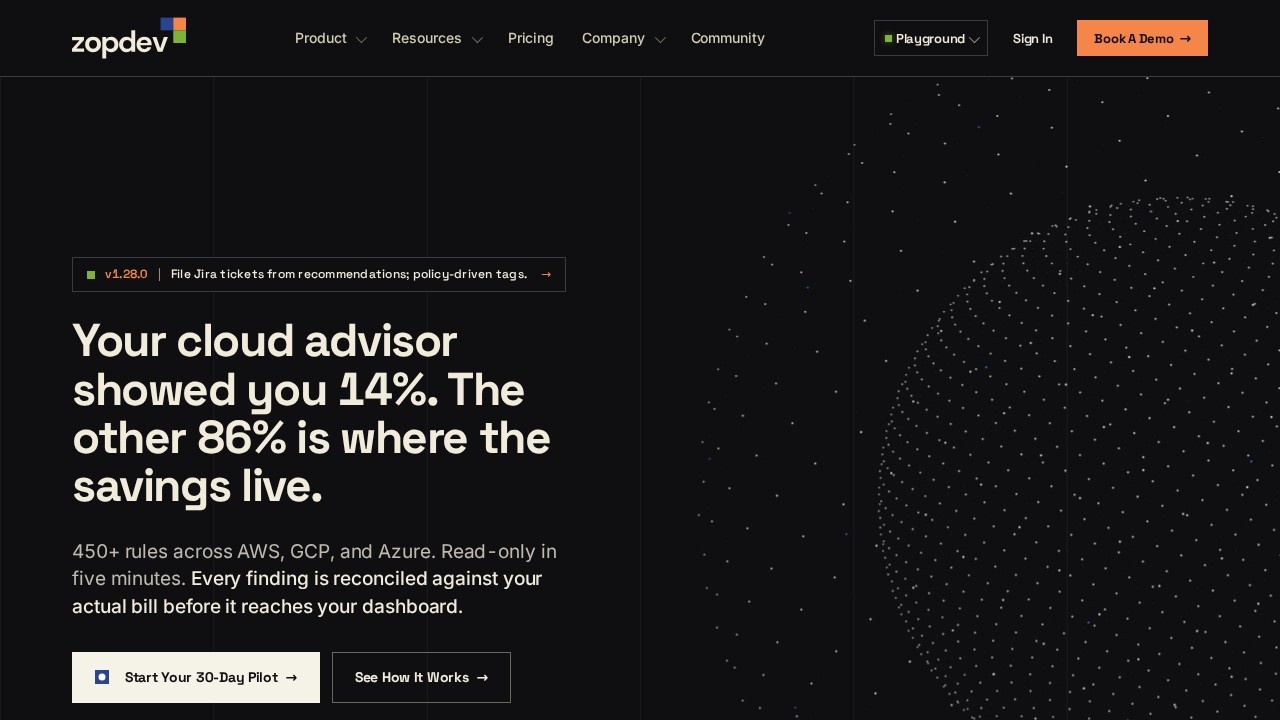
zopnight is a cloud cost optimization platform by zop.dev that schedules non-production cloud resources to shut down during idle periods and right-sizes remaining instances. It cuts non-production costs by 70% across AWS, GCP, Azure, and Kubernetes. Users deploy it to automatically detect waste, schedule start-stop cycles, and resize production workloads—all reconciled against actual billing data. It is read-only by default and can be set up in five minutes.
Application scenarios
Non-production cost reduction
Automatically stop development and test environments on nights and weekends when teams aren't using them.
Multi-cloud governance
Apply 450+ audit rules across AWS, GCP, and Azure from a single workspace.
Production right-sizing
Use Tide to scale compute resources to actual demand, not peak capacity, reducing waste on ASGs, scale sets, and AKS pools.
Compliance and security monitoring
Detect IAM, encryption, and public-access misconfigurations across clouds.
Orphan resource cleanup
Identify detached disks, stale snapshots, and unattached IPs that continue to incur charges.
Discount optimization
Find unused Reserved Instances, Savings Plans, and Hybrid Benefit opportunities.
Core Features
450+ audit rules
Covers eight categories—idle, right-sizing, schedule, orphan, compliance, discount, security, and reliability—across AWS, GCP, and Azure.
Smart Scheduling
Cron-based, dependency-aware scheduling for 30+ resource types (VMs, K8s, SQL, Databricks) with per-timezone support and production-safe overrides.
Smart Autoscaling by Tide
Sizes compute to moment-by-moment demand (not peak) in monitor, recommend, or autopilot modes, achieving 30–40% compute reduction on eligible workloads.
Bill-reconciled recommendations
Every finding is checked against your actual live bill before appearing in the dashboard—no black-box ML.
Architecture canvas view
Visual map of every resource and dependency, filterable by provider and region, with drill-down to config and cost.
Read-only by default
No write permissions required for initial setup; customer databases excluded automatically.
Jira integration
File tickets directly from recommendations for guided remediation.
Policy-driven tagging
Enforce tag compliance across your cloud estate.
Target users
Cloud architects, FinOps teams, DevOps engineers, and cloud governance leads at enterprises managing multi-cloud environments (AWS, GCP, Azure). The platform is designed for organizations with $15M+ cloud spend under management, such as 5 of India’s top 20 FMCG enterprises already on the platform.
How to use zopnight?
Start a 30-day pilot directly from the zop.dev website. The platform is read-only and takes about five minutes to connect your cloud accounts. Once connected, you can view the architecture canvas, filter by provider and region, drill into resource config and cost, and review recommendations. From there, you can enable Smart Scheduling for non-prod cycles, configure Tide for production right-sizing, or file Jira tickets from findings.
Pricing and free trial
A 30-day pilot is offered. No specific pricing tiers or dollar amounts are listed on the page.
Effect review
zopnight addresses a real pain point: the 86% of cloud waste that native advisors like AWS Trusted Advisor miss. Its combination of scheduling, right-sizing, and compliance rules in one workspace reduces the need for manual start-stop and tag work that consumes 30+ engineering hours per week. The bill-reconciled recommendations and read-only default build trust, while the architecture canvas gives teams a single source of truth. For enterprises already managing multi-cloud spend, this tool can deliver measurable savings without operational overhead.
Frequently Asked Questions
What is zopnight?
Which cloud providers does zopnight support?
How does zopnight save costs?
Is zopnight easy to set up?
Does zopnight affect production workloads?
Can zopnight work with existing scheduling tools?
zopnight - AI Tool Detail
zopnight by zop.dev schedules cloud resources to power down during idle periods and right-sizes remaining instances, cutting non-production costs by 70% across AWS, GCP, Azure, and K8s.
Category:Automation
Visit Link:https://zop.dev/zopnight
Tags:cloud cost optimization、cloud resource scheduling、multi-cloud management、Kubernetes cost reduction、DevOps automation