
Xiangji Translate
Xiangji Translate is a versatile tool for image and video translation, along with image editing features like watermark removal, background removal, and cloud storage.
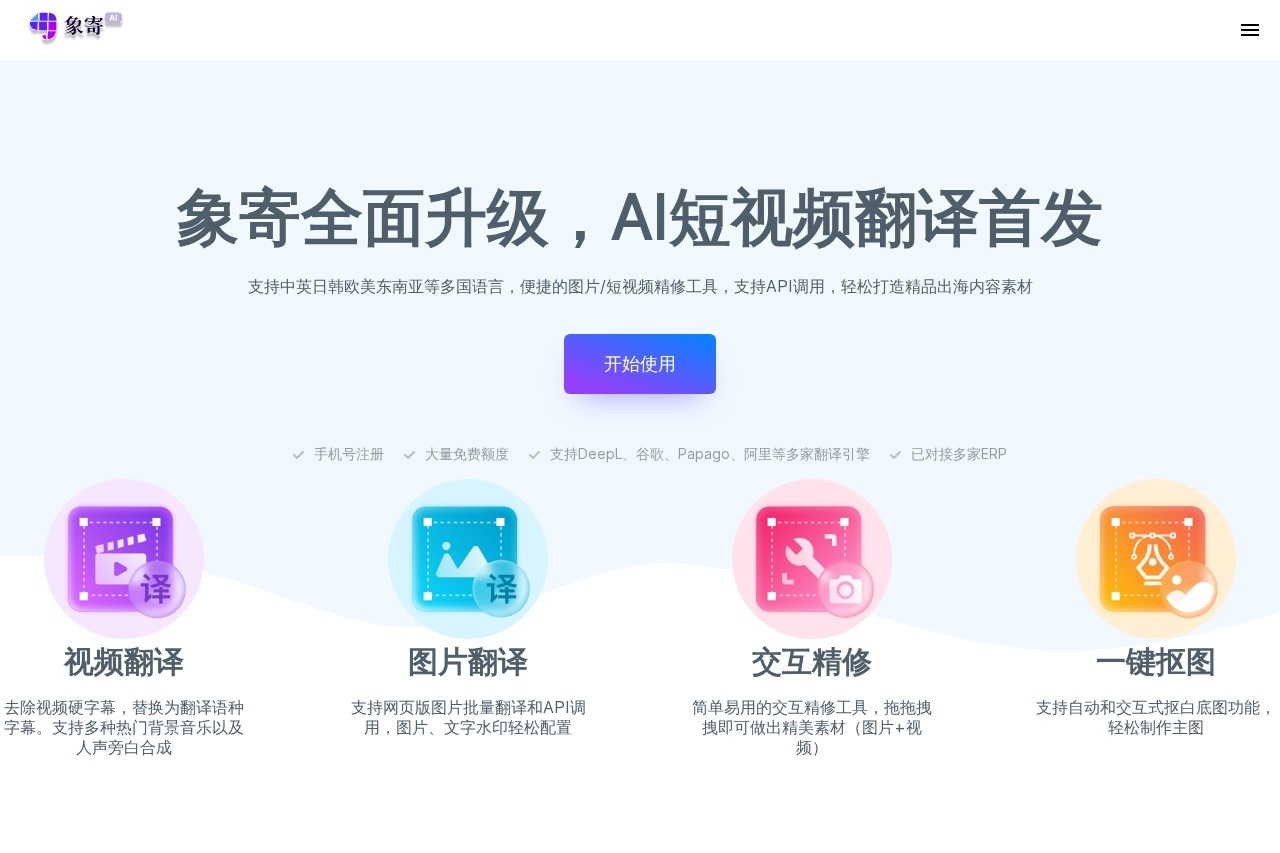
What is Xiangji Translate?
Xiangji Translate is an AI-powered platform for translating and editing visual content. It specializes in translating text within images and videos, including the replacement of hard-coded subtitles. The tool also provides a suite of image editing functions, such as background removal and watermark removal, alongside cloud storage for assets. It is designed to help users efficiently create and localize content for international markets.Application scenarios
Video Localization
Translating and replacing hard subtitles in short videos for different language audiences.
E-commerce Asset Creation
Preparing product images by removing backgrounds, watermarks, and translating text for global storefronts.
Marketing Material Adaptation
Quickly translating and refining images and video clips for international social media or ad campaigns.
Content Repurposing
Using the interactive editing tools to easily modify and enhance existing images and videos without professional software.
Bulk Content Processing
Translating batches of images via the web platform or API for large-scale content projects.
Solving Over-Translation
Manually preventing translation on specific image areas like logos or product prints.
Core Features
AI Video Translation
Removes original hard-coded video subtitles and replaces them with translated subtitles in the target language.
Video Post-Editing
Allows redesign of translated videos with custom subtitle styles, synthetic voiceovers, and background music.
AI Image Translation
Translates text found within images, supporting batch processing via the web interface and API calls.
Interactive Image Editing
Provides a drag-and-drop interface for easy image and video refinement, including vector text box operations and batch text modifications.
One-Click Background Removal
Offers both automatic and interactive tools to remove backgrounds and create clean product cutouts.
Multi-Engine Text Translation
Leverages multiple translation engines (DeepL, Google, Papago, Alibaba Cloud) for textual content.
Complex Scene Handling
The image translation model handles horizontal, vertical, slanted text, and complex backgrounds.
Manual Background Erasure
Includes tools for manually cleaning up difficult backgrounds in challenging images.
Localized Translation Control
Features options to manually cancel translation in specific areas to protect logos or designs.
API & Integration Support
Offers API access and shows integrations with various ERP and e-commerce platforms like Shopify and Ozon.
Target users
This tool primarily benefits content creators, e-commerce sellers, and marketing teams focused on cross-border operations. It is particularly useful for businesses and individuals creating "outbound" content who need to quickly localize visual assets—product images, promotional videos, and social media content—for different languages and regions without deep technical or design expertise.How to use Xiangji Translate?
The process begins by registering an account on the website, which mentions phone number registration. Users can then upload images or videos to the workspace console. The platform provides separate, dedicated interfaces for video translation, image translation, and interactive editing. Users can select target languages, configure translation engines, and use the drag-and-drop tools to refine their assets before exporting the final content.Pricing and free trial
The website states that the platform offers a "large amount of free quota" for new users. It promotes flexible pricing, including a monthly subscription model for high-volume "restocking" needs and cost-effective package deals based on the number of images processed.Effect review
Xiangji Translate positions itself as a comprehensive solution for a specific workflow: taking visual content from one language and preparing it for another. The combination of AI translation with practical editing tools like background removal and manual correction features addresses common pain points in content localization, such as over-translating logos. The support for multiple established translation engines and the claim of an average image translation speed of 0.872 seconds suggest a focus on both quality and efficiency. For users producing content at scale for global marketplaces, this integrated toolset could significantly streamline the process of adapting images and short videos.Frequently Asked Questions
What is Xiangji Translate?
What file formats does Xiangji Translate support for translation?
Can Xiangji Translate remove watermarks from images?
Does Xiangji Translate offer cloud storage?
Is Xiangji Translate free to use?
How accurate is the translation in Xiangji Translate?
Xiangji Translate - AI Tool Detail
Xiangji Translate is a versatile tool for image and video translation, along with image editing features like watermark removal, background removal, and cloud storage.
Category:Image editing
Visit Link:https://xiangjifanyi.com/
Tags:image translation、video translation、image editing、watermark removal、background removal