
NanoClaw
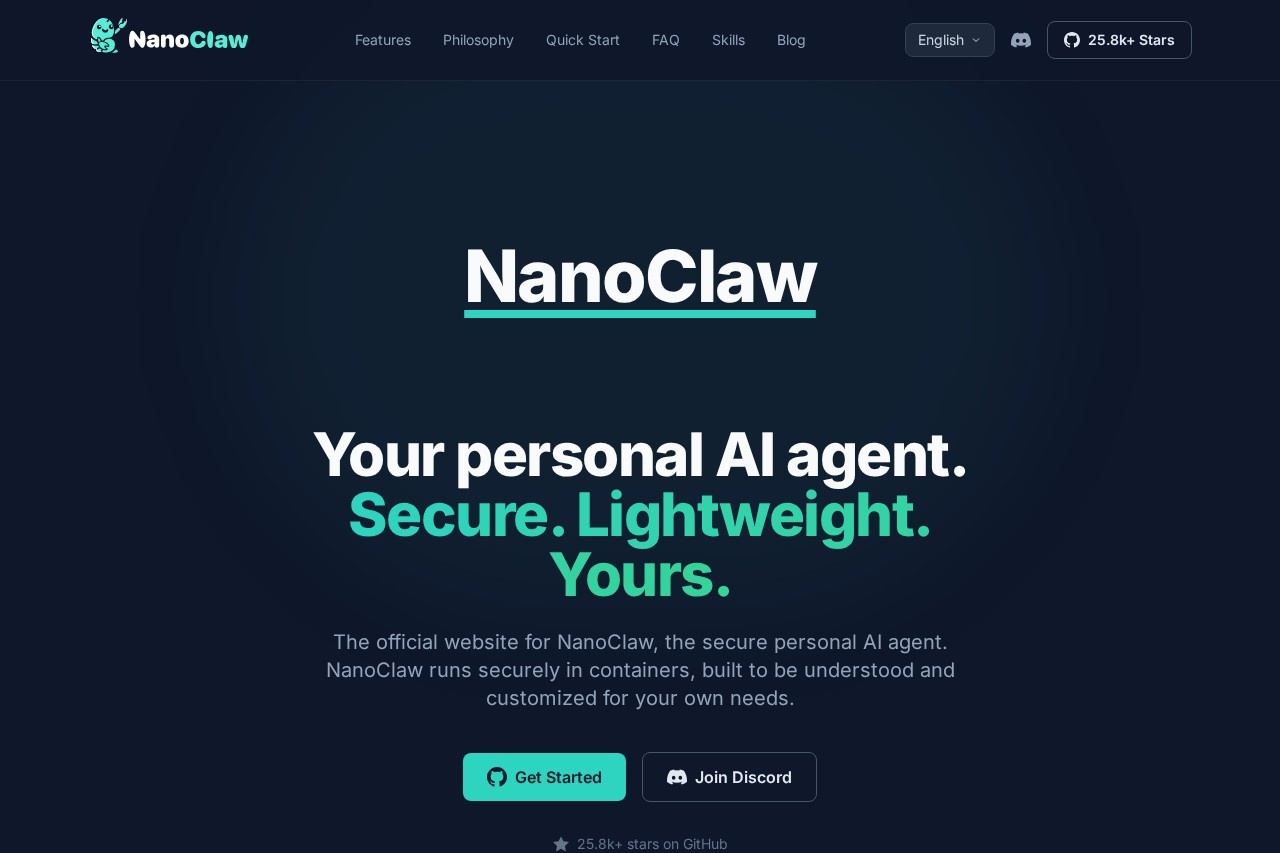
NanoClaw is a secure, lightweight AI agent by its developers, running in containers for privacy. It's a customizable alternative to OpenClaw, built to be understood and tailored for personal automatio
What is NanoClaw?
NanoClaw is a secure and lightweight personal AI agent. It runs inside isolated containers like Docker or Apple Container, prioritizing user privacy and control. The tool is designed as a customizable, understandable alternative to OpenClaw for personal automation. Users interact with it primarily through messaging apps like WhatsApp and Telegram to handle tasks.Application scenarios
Personal task automation
Automate recurring personal jobs like morning briefings or weekly reviews.
Team-based AI projects
Coordinate swarms of specialized AI agents to collaborate on complex tasks.
Secure AI interactions
Run AI agents in isolated containers for private, sandboxed operations.
Custom workflow extension
Add specific capabilities like Gmail integration or custom skills to the agent.
Web research
Have the agent search the web, fetch content, and browse pages to gather information.
Core Features
Container Isolation
Agents run in Apple Container (macOS) or Docker with access only to explicitly mounted resources.
Agent Swarms
Spin up teams of specialized agents that collaborate on complex tasks.
Per-Group Memory
Each chat group has its own isolated CLAUDE.md memory, filesystem, and container sandbox.
Scheduled Tasks
Set up recurring jobs, such as morning briefings or weekly reviews, that run Claude and message you back.
Skills System
Extend functionality by adding skills for services like Gmail or Telegram without bloating the core codebase.
AI-Native Setup
Rely on Claude Code to guide the entire setup process for dependencies, authentication, containers, and services.
Web Access
The agent can search the web, fetch content, and browse pages to research topics.
Concurrency Control
A GroupQueue system limits concurrent containers and provides per-group FIFO ordering with retry backoff on failure.
Simple Architecture
The system is a single Node.js process with agents in isolated containers, built from just 15 source files for clarity.
Target users
NanoClaw benefits developers, tech-savvy individuals, and privacy-focused users who want a transparent, customizable AI automation agent for personal use. It is built for those who prefer a lightweight, understandable codebase over a large, complex system.How to use NanoClaw?
The website indicates an "AI-Native Setup" guided by Claude Code. To begin, visit the official site and likely use the "Get Started" option. The setup process handles dependencies, authentication, and container configuration. You then message your agent through integrated apps like WhatsApp or Telegram to execute tasks and automations.Effect review
NanoClaw presents a focused alternative in the AI agent space by emphasizing security through container isolation and simplicity through a minimal codebase. Its feature set, including agent swarms and a per-group memory model, suggests it is engineered for users who require granular control and privacy for automated workflows. The architecture prioritizes understandable, maintainable code, which is a direct response to the complexity of similar tools. For a developer seeking a lightweight, customizable automation platform, NanoClaw's design principles translate into a tool that is both powerful and deliberately constrained to essential functions.Frequently Asked Questions
What is NanoClaw?
How does NanoClaw ensure privacy?
Can I customize NanoClaw for my needs?
What makes NanoClaw different from OpenClaw?
Is NanoClaw suitable for beginners?
What are common use cases for NanoClaw?
NanoClaw - AI Tool Detail
NanoClaw is a secure, lightweight AI agent by its developers, running in containers for privacy. It's a customizable alternative to OpenClaw, built to be understood and tailored for personal automatio
Category:Claw Product
Visit Link:https://nanoclaw.dev/
Tags:AI agent、containerized、privacy-focused、lightweight、customizable