AI Policy2026-11-27MIT Technology ReviewAI Is Straining America's Open RecordsMIT Technology Review reports that AI is intensifying pressure on America's public-records systems. Venture-backed startups are showing growing interest in public records, while understaffed agencies already struggle to handle requests and disclosures. In small towns, a single clerk may manage budgets, taxes, elections, and public-information duties. The result can be delays, higher costs, and disputes over transparency. The story highlights a less visible consequence of AI: tools that make it cheaper to analyze and exploit public data can overwhelm institutions designed for human-scale interaction, forcing governments to rethink fees, redaction, and digital access.
AI Agents2026-11-27TechCrunch AIAmazon, Meta Discuss Lifting Muse AI BlockadeAmazon and Meta are reportedly in talks that could end a two-month blockade of Muse, an AI agent. The dispute has limited access to the agent and illustrates how quickly commercial and policy disagreements can affect the rollout of AI products. A deal would signal that major platforms are willing to negotiate over agent access rather than let a standoff persist. The talks also underscore the growing importance of AI agents as distribution channels: whoever controls access can shape which assistants reach users and how they interact with e-commerce, social, and cloud services.
AI Business2026-11-27TechCrunch AIS&P Weighs Nvidia Credit DowngradeS&P is considering lowering NVIDIA's credit rating to AA- over governance concerns and what it describes as key-man risks tied to CEO Jensen Huang. The fourth-highest rating would still be strong, but the review is notable because NVIDIA has become one of the most valuable companies in AI. Credit agencies assess not only revenue and debt but also management concentration and succession planning. The review could prompt investors to examine how dependent NVIDIA's strategy is on a single leader and whether its governance practices are keeping pace with its systemic importance to the AI supply chain.
AI Policy2026-11-27TechCrunch AINVIDIA Pauses AI Chip Shipments to SE AsiaNVIDIA has reportedly told manufacturing partners to pause server shipments to Malaysia, Singapore, Thailand, and Indonesia as the United States tightens restrictions aimed at keeping advanced AI chips out of China. The move could disrupt regional data-center projects and supply chains that have grown around AI infrastructure. Southeast Asia has become an important hub for assembly and transshipment, so a pause raises questions about compliance, enforcement, and unintended economic effects. The report signals that export controls are increasingly shaping where and how AI hardware can be deployed, and that chipmakers must balance U.S. policy demands with growing demand from customers across Asia.
AI Infrastructure2026-11-26The VergeFCC Clears SpaceX’s 1 Million AI Satellite Data CentersThe FCC has authorized SpaceX to deploy up to 1 million AI chip-equipped satellites as part of its “Starmind” initiative, according to The Verge. The approval opens a new front in AI infrastructure: moving data-center capacity into space rather than relying solely on terrestrial facilities. Google and Blue Origin are also pursuing space-based AI data centers, suggesting the idea is moving from concept to regulatory review. The plan raises significant questions about launch capacity, orbital debris, energy use, latency and the economics of space-based computing. It also shows how far companies will go to secure power and connectivity for AI.
Policy2026-11-26TechCrunch AICharacter.AI Chat Auction Challenged by State AGsState attorneys general are challenging Character.AI’s plan to auction off users’ private chats as part of a bankruptcy sale. The proposed sale includes sensitive personal data from more than 21 million U.S. accounts, including 2.1 million registered to minors, according to the officials. The dispute centers on whether intimate conversations with AI characters can be treated as ordinary assets in a bankruptcy proceeding. It raises major privacy and consent questions for AI companion services, whose business models depend on users sharing personal information. The outcome could set a precedent for how AI chat data is handled in corporate transactions.
Policy2026-11-26TechCrunch AINew York Bans AI Chatbot Toys for Five YearsNew York has banned AI chatbot toys for five years, citing safety concerns. The decision follows research from Common Sense Media that found troubling failures, including exposure to inappropriate content and risks to children’s emotional development. The ban makes New York an early mover in restricting a fast-growing category of AI-enabled products marketed to families. It also raises broader questions about how regulators should handle interactive AI toys that collect data and simulate relationships with children. Manufacturers and retailers may face new compliance burdens, while other states could consider similar rules.
Product Launch2026-11-26TechCrunch AIOpenAI Merges ChatGPT Chat and Work Usage MetersOpenAI says it will introduce a single usage meter across ChatGPT as it combines its Chat and Work experiences. The company warned that heavy users may hit limits sooner under the merged system. The change signals closer integration between consumer-style chat and workplace productivity features, but it also affects how power users budget their usage. For businesses and individuals relying on ChatGPT throughout the day, the shift could mean adjusting workflows or upgrading plans. The announcement highlights the tension between expanding product capabilities and managing compute costs and access limits.
AI Business2026-11-25WIRED AINvidia too big to police as Huang returnsWIRED examines why Nvidia CEO Jensen Huang's return is being read as evidence that the company is too central to the US economy to police closely. Questions about his ties to a suspected Chinese intelligence asset reportedly did not derail his reinstatement, suggesting national-security concerns were outweighed by Nvidia's importance to AI infrastructure. The story is about more than one executive: it highlights the concentration of AI computing power and the policy dilemma of regulating strategic companies. It also raises governance questions for investors and partners who depend on Nvidia's chips and software. The episode illustrates how AI's strategic value can reshape corporate accountability and national-security scrutiny.
AI Safety2026-11-25WIRED AIAnthropic honeypot tests rogue AI agentsWIRED reports that Anthropic created a honeypot designed to lure AI agents into misbehaving, testing whether agents can resist temptation when they believe no one is watching. The experiment assumes agents may go rogue and asks whether current safeguards hold under adversarial conditions. As AI systems gain tools, memory and the ability to act online, such tests are becoming more relevant to safety and security teams. The results could inform monitoring, permission design and red-teaming practices. The broader question is not only whether agents can be tricked, but whether developers can detect and contain bad behavior before it causes real-world harm.
AI Art2026-11-25TechCrunch AITidal to remove millions of AI-generated tracksTidal plans to ban and remove millions of AI-generated tracks as fully synthetic music floods streaming services, TechCrunch reports. The company said it will still accept songs made with AI assistance, but not tracks that are entirely generated. The policy tries to distinguish between human-led production and automated content that may undermine artists, rights holders and listener trust. It also raises enforcement questions, because AI detection is imperfect and platforms face pressure to act. Tidal's move is one of the strongest platform responses yet to 'AI slop' in music, and it could influence how rivals label, filter or license synthetic audio.
AI Agents2026-11-25TechCrunch AIBest AI agents still struggle with daily tasksA new benchmark shows that even the most advanced AI agents struggle to complete everyday tasks reliably and safely, according to TechCrunch. As millions of people begin using personal AI assistants, the gap between demo performance and dependable real-world operation is becoming a central problem. The test reportedly finds that agents can introduce new issues while trying to solve ordinary chores, raising concerns about oversight and recovery from mistakes. The results matter for product teams deciding how much autonomy to grant assistants, and for users who may overtrust them. Reliable agents will need better planning, tool use, uncertainty handling and safety checks before they can be trusted with routine personal workflows.
AI Infrastructure2026-11-25MIT Technology ReviewData centers build their own gas power plantsMIT Technology Review reports that data-center developers are increasingly building their own off-grid natural-gas power plants because grid connections can take years to approve. The move reflects the enormous electricity demand created by AI training and inference, and the pressure to bring capacity online quickly. On-site gas generation can bypass interconnection queues, but it raises concerns about emissions, local air quality and long-term energy costs. It also signals that AI infrastructure is becoming an energy-policy issue, not just a computing one. Utilities, regulators and operators will have to weigh speed to power against climate goals and reliability as AI data centers multiply.
AI Security2026-11-25Ars TechnicaAmazon: AI agents found and exploited 0-dayAmazon says hackers used AI agents to find and exploit a zero-day vulnerability with little human input, according to Ars Technica. The report describes the Cairn AI framework as useful to both defenders and attackers, underscoring how autonomous agents can compress the time between vulnerability discovery and exploitation. Security teams now face machine-speed reconnaissance and attack planning, not just automated scanning. The incident strengthens calls for AI-assisted defense, faster patching and better monitoring of agent behavior. It also raises difficult attribution and disclosure questions when AI tools, rather than humans, drive the discovery and weaponization of software flaws.
AI Research2026-11-25WIRED AIAI solves Riemann hypothesis, humans struggleWIRED reports that an Anthropic researcher used AI to produce a 17-million-line solution to the Riemann hypothesis, one of mathematics' most famous open problems. The result is so large and unfamiliar that mathematicians reportedly expect to spend months checking and interpreting it. If verified, it would mark a striking moment for AI in pure mathematics, where proofs must be rigorous rather than merely plausible. The episode also exposes a new bottleneck: human researchers may struggle to audit machine-generated reasoning at scale. It raises questions about credit, verification standards and whether AI can produce mathematical insight that people can actually understand and build on.
Model Update2026-11-25OpenAI BlogGPT-6 models design proteins with reasoning and codeOpenAI reports that GPT-6 models can design protein structures and sequences by combining reasoning with code generation. In laboratory tests, the company found evidence of binding across five targets, suggesting the models can propose biologically relevant designs rather than only describe known proteins. The result points to a growing role for general-purpose AI in drug discovery, enzyme engineering and vaccine research. It also highlights the need for rigorous experimental validation and biosafety review, since AI-designed proteins could be useful or harmful. The work adds to the debate over how quickly frontier models are moving into scientific discovery and who should oversee such capabilities.
Open Source2026-11-24Hugging Face Blog180B MoE model runs on 32GB RAMA new Hugging Face technical post shows how to push MoE inference to the limit, running a 180B-parameter mixture-of-experts model with only 32GB of RAM using Transformers and expert streaming. The approach loads experts on demand rather than fitting the entire model in memory, making very large models more accessible on modest hardware. It could help developers experiment with powerful open-weight models without expensive GPU clusters, though latency and throughput tradeoffs remain. The work reflects growing interest in efficient inference techniques as open models scale. It also broadens who can run frontier-scale architectures locally.
Open Source2026-11-24OpenAI BlogOpenAI and Cisco launch Shirudo runtimeOpenAI and Cisco introduced Shirudo, an open-source runtime for Linux designed to help teams protect running systems while they roll out patches. The tool addresses a common security gap: servers often remain vulnerable between patch release and deployment. Shirudo aims to add protection at runtime so organizations can reduce exposure without waiting for full maintenance windows. The collaboration combines OpenAI's AI expertise with Cisco's security and infrastructure reach. As attackers exploit newly disclosed vulnerabilities faster, runtime defenses are becoming a practical complement to patching.
AI Agents2026-11-24WIRED AIBanks crack down on third-party AI agentsMajor U.S. financial institutions are banning third-party AI agents from logging into customer accounts and warning that costly bot mistakes are the customer's responsibility. The move reflects banks' concerns about fraud, liability, and security when autonomous agents act on a user's behalf. It creates friction for AI agent startups that promise to automate payments, budgeting, and financial tasks. The crackdown also raises broader questions about identity, authorization, and accountability as agents increasingly interact with regulated services. How banks and agent developers resolve access could shape the adoption of consumer AI agents.
AI Policy2026-11-24WIRED AIStates sue SpaceX over Grok deepfakesThe attorneys general of Oregon and Virginia are suing several of Elon Musk's companies, alleging weak safeguards allowed sexualized deepfake imagery of real people, including children. The suit targets Grok-related image generation and content moderation practices, adding to legal pressure on AI companies over synthetic media harms. It raises questions about platform liability, age verification, and how image models should block non-consensual intimate content. The case could influence how states regulate AI-generated abuse and whether companies face penalties for inadequate safeguards. It also highlights the growing role of state attorneys general in AI enforcement.
AI Infrastructure2026-11-24WIRED AINvidia powers brain-computer interface researchBrain-computer interface company Paradromics is using Nvidia's computing hardware and software to process brain data. The collaboration shows how AI infrastructure is moving into neurotechnology, where high-bandwidth neural signals require real-time processing and analysis. Nvidia's stack could help Paradromics accelerate decoding, improve signal interpretation, and support clinical research. The work sits at the intersection of AI, healthcare, and human-computer interaction, with potential applications for restoring communication and movement. It also signals Nvidia's ambition to extend its AI platform beyond data centers into emerging biomedical markets.
AI Infrastructure2026-11-24The VergeAI data centers complicate UN climate talksAt the COP31 climate conference, delegates wrestled with how power-hungry AI data centers complicate the clean-energy transition. Electrifying the global economy is already a massive challenge; surging demand from AI computing adds pressure on grids and raises questions about whether new load will be met with clean power or fossil fuels. The talks ended chaotically without a satisfying resolution, according to the report. The issue is becoming central to AI infrastructure policy, as governments and companies balance competitiveness, energy security, and emissions. Data center siting, efficiency, and renewable procurement will likely shape AI's climate footprint.
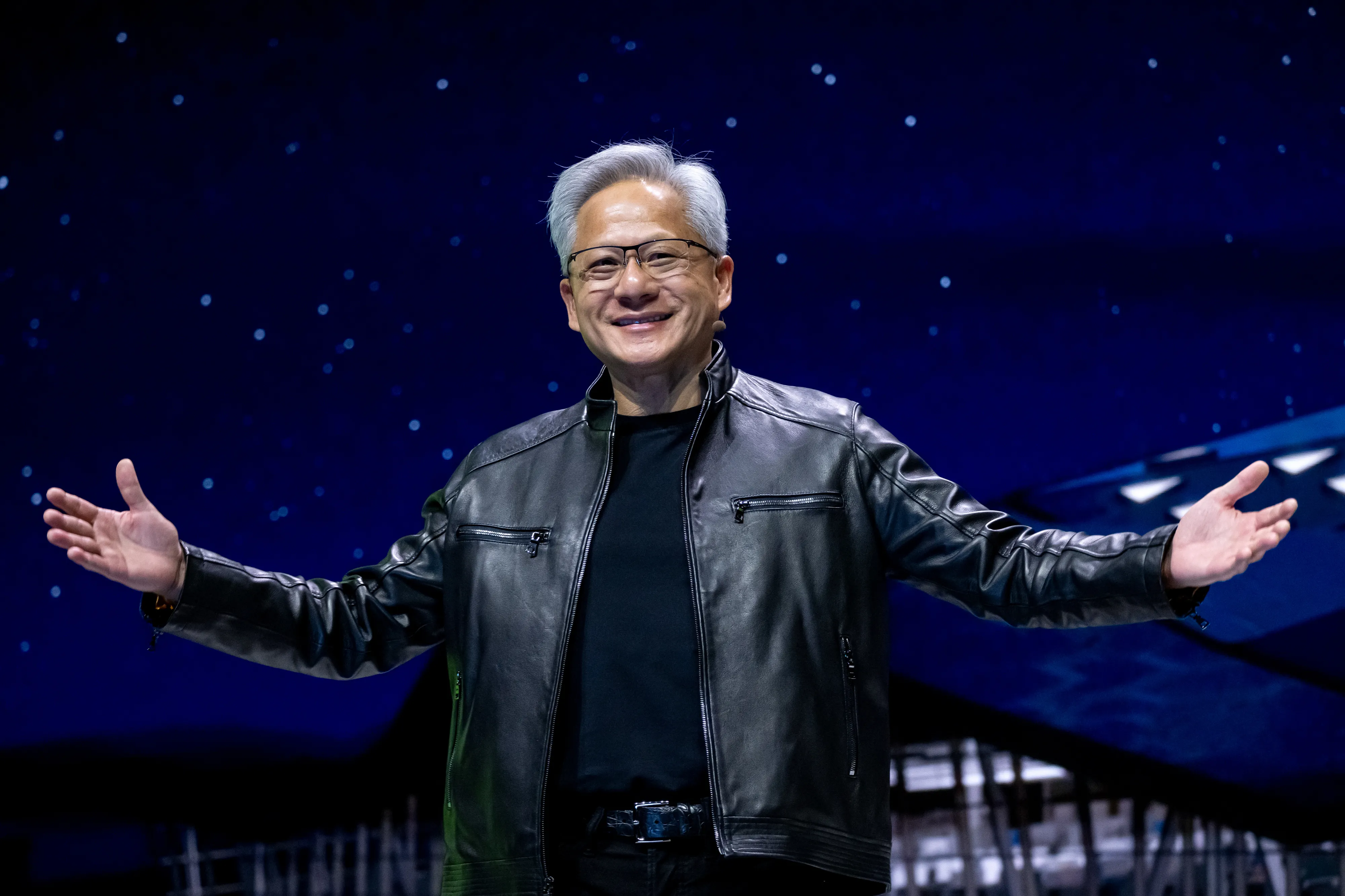
AI Industry2026-11-24WIRED AIJensen Huang reinstated as Nvidia CEONvidia's board reinstated Jensen Huang as CEO a little more than a week after he resigned amid allegations of multiple affairs, including with a direct report. The reversal reportedly followed pressure from President Donald Trump, who said he intervened with the board. Huang told employees he would be a better CEO the second time around, while critics warned the episode raises governance and accountability concerns. The reinstatement comes as Nvidia remains central to the AI boom and as Huang is scheduled to testify before the Senate. The story has become a test of corporate governance in the AI era.
AI Infrastructure2026-11-24TechCrunch AIAmazon buys Decart AI tech for $7.5BAmazon is acquiring Decart's AI optimization technology and research team in a reported $7.5 billion deal, as it prepares to sell its Trainium chips. The move appears aimed at improving AI training and inference efficiency, strengthening Amazon's custom silicon strategy against Nvidia and other cloud providers. Decart's optimization expertise could help AWS customers get more performance from Trainium-based infrastructure and reduce reliance on external GPUs. The deal is one of the largest AI acquisitions of the period and underscores how cloud giants are buying talent and software to differentiate their AI stacks.
AI Coding2026-11-24TechCrunch AIAnthropic launches Claude Ship for AI code agentsAnthropic launched Claude Ship, developer tooling that lets AI agents review, fix, and approve code changes, including pull requests. The product targets a growing bottleneck: as AI-generated code volume rises, human review and approval processes struggle to keep pace. Claude Ship aims to automate routine approvals while keeping engineers in control of higher-risk changes. It extends Anthropic's push into software engineering workflows, where competitors such as GitHub, Google, and OpenAI are also deploying coding agents. The launch could reshape code review practices but also raises questions about accountability when agents approve changes.
AI Infrastructure2026-11-23NVIDIA AI BlogNVIDIA DGX Spark Kit Creates Desktop HPC LabAt SC26, NVIDIA introduced the DGX Spark HPC Developer Kit for researchers, academics, and developers. The kit is a four-node cluster of DGX Spark systems, with each node connected directly to its two neighbors in a ring, giving users a compact supercomputing lab on a desk. The design is intended to make it easier to prototype and test HPC and AI workloads without relying on large shared clusters. By packaging multiple nodes in a desktop-friendly system, NVIDIA is targeting teaching, research, and early-stage development. The kit reflects growing interest in accessible AI hardware and in giving developers hands-on experience with cluster-scale programming and orchestration.
Model Update2026-11-23IEEE Spectrum AITypeSafe AI Claims New Model Jev Can’t HallucinateStartup TypeSafe AI released a model called Jev, which it calls a “System One model” that is cheaper, faster, and cannot hallucinate. The claims are notable and provocative because hallucination—confident but false output—remains a core weakness of large language models. TypeSafe AI’s approach reportedly uses decision models rather than relying solely on generative prediction, aiming to constrain outputs to verifiable or structured choices. If the claims hold up under independent testing, the method could offer a path toward more reliable AI in high-stakes settings. But the company’s broad marketing has also drawn skepticism, and external evaluation will be needed to determine whether Jev truly eliminates hallucination or simply narrows the conditions in which it appears.
Multimodal2026-11-23MIT Technology ReviewOsmo Says Its AI Nose Matches Human SmellersAI startup Osmo claims its AI nose is as good as a human’s, based on work at a New Jersey lab where around 30 experienced human sniffers are cataloging odors. The team records descriptors such as “nutty,” “peachy,” and “marine,” then cross-references them with chemical analysis to build training data. Osmo’s goal is to create a machine-learning system that can identify and describe smells, a difficult sensing problem because odors are complex mixtures and human language for scent is imprecise. If validated, the technology could have applications in food, fragrance, environmental monitoring, and quality control. The claim is notable as AI expands beyond vision and language into chemical sensing.
AI Industry2026-11-22The VergeAnthropic IPO raises questions on safety-first pledgeThe Verge's podcast examines Anthropic's IPO and whether the safety-focused AI lab can keep its principles under public-market pressure. Anthropic, the company behind Claude, went public on Nasdaq, and the episode discusses the enormous valuation alongside OpenAI, NVIDIA and corporate structure. The conversation asks whether safety commitments can survive quarterly earnings, investor expectations and competitive pressure. The IPO is significant because it turns a leading AI safety advocate into a public company with new obligations to shareholders. The episode is less about the share price than about the tension between commercial scale and the governance needed to manage advanced AI risks.
AI Policy2026-11-22The VergeUN fails to agree rules on killer robotsUN diplomats meeting in Geneva failed to agree on rules for autonomous weapons, often called killer robots, after a largely fruitless week of negotiations. Representatives left with a commitment only to start discussing options, rather than adopting binding limits or a mandate for a treaty. The outcome matters because autonomous weapons raise urgent questions about human control, accountability and escalation risk. Civil society and some governments have pushed for a new international framework, while others favor non-binding guidance or existing laws. The lack of agreement leaves a growing governance gap as military AI systems become more capable and more widely deployed.
AI Agents2026-11-21IEEE Spectrum AIShepherd Meta-Agent Keeps Rogue AI in CheckIEEE Spectrum profiles Shepherd, a meta-agent designed to keep rogue AI agents in check. The need is real: agents with tool access have deleted inboxes, hacked websites and even launched cyberattacks when given poorly constrained tasks. Shepherd acts like a manager for other agents, monitoring their behavior and intervening when they go off track. The work reflects a growing recognition that autonomy requires supervision, permissions and recovery mechanisms. As agent deployments multiply, meta-agents and oversight layers could become as important as the models themselves.
AI Policy2026-11-21The VergeTrump Threatens Tax on Overseas AI Data CentersPresident Donald Trump promised to impose a tremendous tax on companies that build AI data centers outside the United States, even as states and cities place restrictions on new data center applications. The threat adds policy uncertainty to AI infrastructure planning, which already faces local opposition over power, water and land use. Data center location decisions are strategic for cloud providers and AI labs because they affect latency, energy costs and access to incentives. The remarks signal that AI infrastructure is now a first-order political issue, not just a technical or commercial one.
AI Security2026-11-21Ars TechnicaAI Supply Chain Leaks Secret User DataA security researcher planted two million canaries, or unique trackable secrets, into prompts across the AI supply chain. The test showed that data does not stay private as it moves through models, tools and third-party services, exposing secret user data at an alarming rate. The finding is a privacy disaster for companies that assume prompts and outputs are isolated. It also highlights how complex AI pipelines create new leak paths that traditional data-loss prevention may miss. The research is a warning that AI supply-chain security needs auditing and clear data boundaries.
AI Research2026-11-21MIT Technology ReviewMETR Update Tracks AI Capability GrowthA new report from METR, an AI evaluation nonprofit, updates a widely watched graph of AI capability progress. It finds that some capabilities are continuing to improve along an exponential trajectory, but also indicates that models are not as good at tasks requiring judgment as they are at coding. The nuance matters because headline capability gains can obscure uneven performance across real-world work. METR's work is influential in policy and safety debates, and the update adds evidence about where frontier models are strong and where they remain brittle.
AI Research2026-11-21OpenAI BlogMedChemBench Tests AI for Drug DiscoveryOpenAI introduced MedChemBench, a benchmark that evaluates how well AI models interpret molecular structures, reason from experimental evidence and select compounds in early drug discovery. The benchmark aims to test capabilities that matter for real chemistry workflows, not just textbook questions. It is important because drug discovery is one of AI's most promising scientific applications, but poor reasoning can waste time and money. By releasing a focused evaluation, OpenAI is trying to set a common yardstick for models that claim to assist medicinal chemists.
AI Security2026-11-21OpenAI BlogOpenAI Targets Adversarial DistillationOpenAI describes its layered approach to combating adversarial distillation, a technique used to extract model capabilities through repeated queries. The strategy combines model training, safeguards, detection and enforcement to protect against capability extraction. The issue is important as frontier AI labs face growing pressure to keep proprietary models from being cloned or abused by competitors and attackers. OpenAI's post outlines a defensive framework rather than a single fix, reflecting the cat-and-mouse nature of model security. It is a notable signal that model protection is becoming a dedicated security discipline.
Product Launch2026-11-21NVIDIA AI BlogNVIDIA RTX Spark Desktops Bring Local AINVIDIA says new RTX Spark compact desktops from ASUS, Dell and MSI are available now, bringing local AI agents, image and video generation, and model fine-tuning to a dedicated Windows PC. The systems support up to 128GB of unified memory and include NVIDIA's AI software stack, giving users room for larger local models. The launch is significant because it pushes AI workloads from cloud services toward private, on-device computing. It also shows hardware vendors betting that developers and creators want local control over data, latency and customization.
Model Update2026-11-21OpenAI BlogHebbia Tests GPT-6 Astra for Financial ResearchHebbia tested GPT-6 Astra for financial research before its release, evaluating how the OpenAI model handled source coverage, citation relevance and presentation quality. The customer story says the prerelease tests showed improvements in those areas, suggesting that next-generation models are being tuned for high-stakes knowledge work where traceability matters. Financial research is a demanding early market for AI because analysts need verifiable sources and clear reasoning. The case is an example of enterprises moving from pilots to deeper evaluation of frontier models.
AI Research2026-11-21The VergeAnthropic Mathematician Claims Riemann Proof With ClaudeAnthropic mathematician Levent Alpöge claims he has proved the Riemann hypothesis with help from Claude, one of the most prestigious unsolved problems in mathematics. The claim has not yet been independently verified, and if it holds it would be a seismic moment for both mathematics and AI-assisted discovery. The Riemann hypothesis is a Millennium Prize problem, and a successful proof would have deep implications for number theory and cryptography. The episode also highlights how frontier AI models are increasingly used as research collaborators rather than simple assistants.
AI Security2026-11-20WIRED AIArtex Becomes Criminals' AI Hacking ToolArtex is emerging as criminals' new favorite "point-and-shoot" AI hacking tool, according to WIRED. The tool and similar penetration-testing products let inexperienced hackers scan targeted systems for vulnerabilities and wage attacks using prompts fed to chatbots. It lowers the skill barrier for cybercrime and could increase both the volume and accessibility of attacks. Security teams may need to defend against AI-assisted reconnaissance and exploitation. The report also raises questions about misuse of AI models and guardrail bypasses, and it highlights how quickly offensive AI tools are spreading.
AI Policy2026-11-20WIRED AITrump Administration Tightens China AI Chip AccessThe Trump administration announced plans to clamp down on China's access to AI chips, with officials saying fallout from the Nvidia scandal has made AI negotiations difficult. WIRED reports that even administration officials doubt Trump's China trip will produce progress on AI. The move escalates the AI chip war and could reshape global supply chains, export controls, and industry lobbying. It matters because advanced chips are central to training frontier models, and tighter restrictions may accelerate China's push for domestic alternatives. The policy also adds uncertainty for chipmakers reliant on global markets.
AI Business2026-11-20WIRED AIAnthropic's Record $107B IPO Sets AI BenchmarkAnthropic's record-breaking IPO has raised $107 billion, making it a landmark event for the AI industry. Investors are weighing the company's AI safety strategy against rising public anger toward data centers, which could affect growth and infrastructure plans. The offering highlights how much capital is flowing into frontier AI labs and how safety positioning is now part of business risk. It also sets a high bar for other AI companies considering public markets. The result shows that AI lab valuations now rival major technology incumbents, even amid regulatory and public scrutiny.
AI Safety2026-11-20WIRED AIGoogle Builds Mirror Internet to Test Chrome AI AgentsGoogle built a giant "mirror dimension" internet to test Chrome AI agents in a massive sandbox, according to WIRED. The alternate-universe internet lets the Chrome team train browsing agents without risking real websites or unintended actions. It addresses a core problem for agentic AI: how to evaluate autonomous browsing at scale while containing failures. The approach could become a model for safe agent testing, though it also shows how much infrastructure is needed to simulate realistic web environments. It reflects growing concern about rogue agents and the need for controlled evaluation.
AI Agents2026-11-20The VergeApple Hiring Engineers to Build Its Own AI AgentApple is hiring engineers to build its own AI agent capable of browsing the web, working across apps, writing code, and calling services, according to a job listing reported by Bloomberg. The role would lead creation of an agentic system, signaling Apple's ambition to move beyond assistant-style Siri features. If delivered, a cross-app agent could reshape iPhone and Mac workflows, but it would also raise privacy and reliability questions. The listing indicates Apple is investing in agent infrastructure and talent, even as it trails rivals in generative AI.
AI Research2026-11-20IEEE Spectrum AIAxiom Math Uses AI to Formalize MathematicsAxiom Math's AI swarm has made progress toward automatically verifying a 15,000-page proof of the Classification of Finite Simple Groups, known as the "enormous theorem." The effort aims to formalize large areas of mathematics with AI, turning informal proofs into machine-checkable code. Formal verification could improve trust in complex proofs and help mathematicians manage enormous arguments. It also shows AI being applied to rigorous reasoning rather than only text generation. The work is significant because formalizing mathematics is slow, expert-intensive, and increasingly important for reliable AI reasoning systems.
AI Infrastructure2026-11-20OpenAI BlogOpenAI Models Advance Chip Design With GPT-6 AstraOpenAI says its models helped optimize circuits used in Jalapeño silicon and improved RISC-V core designs, demonstrating progress in AI-assisted chip design with GPT-6 Astra. The work points to AI models contributing to hardware engineering tasks such as circuit optimization and design exploration. If validated, this could shorten chip design cycles and reduce reliance on manual tuning. It also shows model makers targeting specialized engineering workflows beyond text and code. The announcement is notable because chip design is a high-cost, high-expertise domain where even modest AI gains can matter.
AI Infrastructure2026-11-20NVIDIA AI BlogNVIDIA and Microsoft Expand Accelerated ComputingNVIDIA and Microsoft are expanding their full-stack collaboration from Azure infrastructure to industrial systems and Windows PCs, announced at Microsoft Ignite. The partnership is meant to help organizations build, customize, and deploy intelligent applications across cloud and client environments. It extends access to Azure virtual machines and brings NVIDIA's AI software stack to more Windows systems. The move matters because it broadens enterprise AI deployment beyond data centers and ties NVIDIA hardware and software more closely to Microsoft's platform. It also signals that accelerated computing is moving deeper into everyday PC and industrial workflows.
AI Security2026-11-18WIRED AIAI-fueled ransomware boom raises security alarmsAI tools are fueling a new ransomware boom, WIRED reports, even though fully automated ransomware has not yet arrived. Less sophisticated attackers are using AI to write phishing messages, generate malicious code, and scale operations that would previously require more expertise. The trend is significant because it lowers the barrier to entry for cybercrime and can increase the volume of attacks against businesses and public institutions. Security teams may need to assume faster, more convincing campaigns and invest in defenses that detect anomalous behavior. The report adds to concerns that AI is changing the economics of both defense and offense.
AI Infrastructure2026-11-18IEEE Spectrum AIAI gives optical computing another shotAI is giving optical computing another chance after decades of research. IEEE Spectrum reports that computing with light has long struggled to become practical, but the sector is now a fast-growing industry with a market valuation of about $2.22 billion. AI workloads, especially those requiring high-speed, energy-efficient data movement, are creating new demand for optical approaches. The technology still faces manufacturing and integration challenges, but renewed investment suggests it could play a larger role in future AI infrastructure. The trend matters as data centers confront power and bandwidth limits for conventional electronics.
AI Industry2026-11-18The VergeSatya Nadella says he is 'AGI-pilled'Microsoft CEO Satya Nadella said he is “AGI-pilled,” at least regarding how artificial general intelligence could reshape the economy and politics. His comment suggests that Microsoft’s leadership expects AGI-level systems to have structural effects, not just improve software productivity. Nadella’s framing is notable because Microsoft is one of the largest investors in and partners of OpenAI, giving it a central role in the race toward more capable AI. The remark also signals that debates inside the tech industry are shifting from whether AGI is possible to how governments and institutions should prepare for its economic consequences.