
PicoClaw
PicoClaw is a lightweight, self-hosted AI assistant by its developers, designed for minimal resource use with under 10MB RAM and 1-second startup. It runs on diverse hardware from Raspberry Pi to Andr
What is PicoClaw?
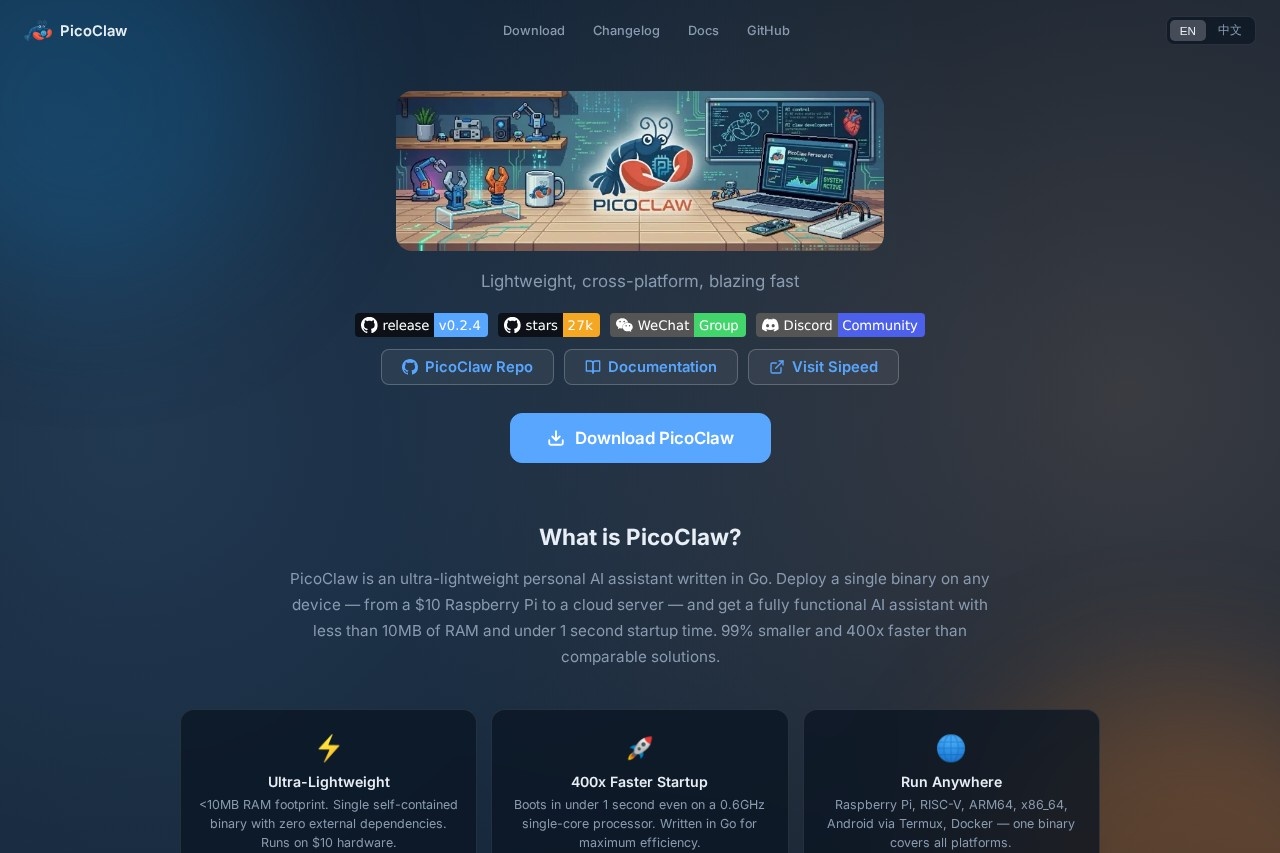
PicoClaw is a lightweight, self-hosted AI assistant. It is designed by its developers for minimal resource consumption, using under 10MB of RAM and starting up in one second. The tool runs on diverse hardware, from Raspberry Pi to Android devices.Application scenarios
Personal AI Assistant
Running a private, low-resource AI on personal hardware like a Raspberry Pi.
Edge Computing
Deploying AI functionality on low-power devices at the network edge.
Development & Prototyping
Testing and integrating AI features in resource-constrained environments.
Mobile Integration
Utilizing AI capabilities directly on Android-based mobile platforms.
Core Features
Lightweight Design
The assistant operates using under 10MB of RAM.
Fast Startup
It achieves a startup time of approximately one second.
Self-Hosted Deployment
Users can host and run the AI assistant on their own hardware.
Broad Hardware Compatibility
The tool runs on a wide range of devices, from Raspberry Pi to Android systems.
Community Support
Users can join a Discord server for discussions and technical support.
Regional Updates
The team provides product news updates through region-specific channels like Google Forms and Feishu.
Target users
This tool benefits developers, hobbyists, and tech enthusiasts who need a private, efficient AI that can run on modest or specialized hardware. It is particularly relevant for those working with edge computing, IoT projects, or anyone seeking a self-hosted AI solution without significant resource overhead.How to use PicoClaw?
Implementation involves deploying the self-hosted software onto compatible hardware, such as a Raspberry Pi or Android device. For specific setup instructions, support, and to join the user community, visit the official website and its linked Discord server.Effect Review
PicoClaw addresses a specific niche by prioritizing extreme efficiency and hardware flexibility over raw power. Its defining characteristic is the ability to function as a usable AI assistant in environments where traditional models cannot run, unlocking potential for personalized and private AI on everyday devices. The active community channels suggest a focus on user support and iterative development. For its target user, the primary value is in achieving capable AI functionality where it was previously impractical due to resource constraints.Frequently Asked Questions
What is PicoClaw?
What hardware can PicoClaw run on?
How much RAM does PicoClaw use?
How fast does PicoClaw start up?
Is PicoClaw self-hosted?
Who developed PicoClaw?
PicoClaw - AI Tool Detail
PicoClaw is a lightweight, self-hosted AI assistant by its developers, designed for minimal resource use with under 10MB RAM and 1-second startup. It runs on diverse hardware from Raspberry Pi to Andr
Category:Claw Product
Visit Link:https://picoclaw.io/
Tags:self-hosted AI、lightweight assistant、minimal resource usage