
Semantic Scholar
AI-powered research tool by Allen Institute for AI that uses semantic analysis to help scholars discover and understand relevant scientific literature efficiently.
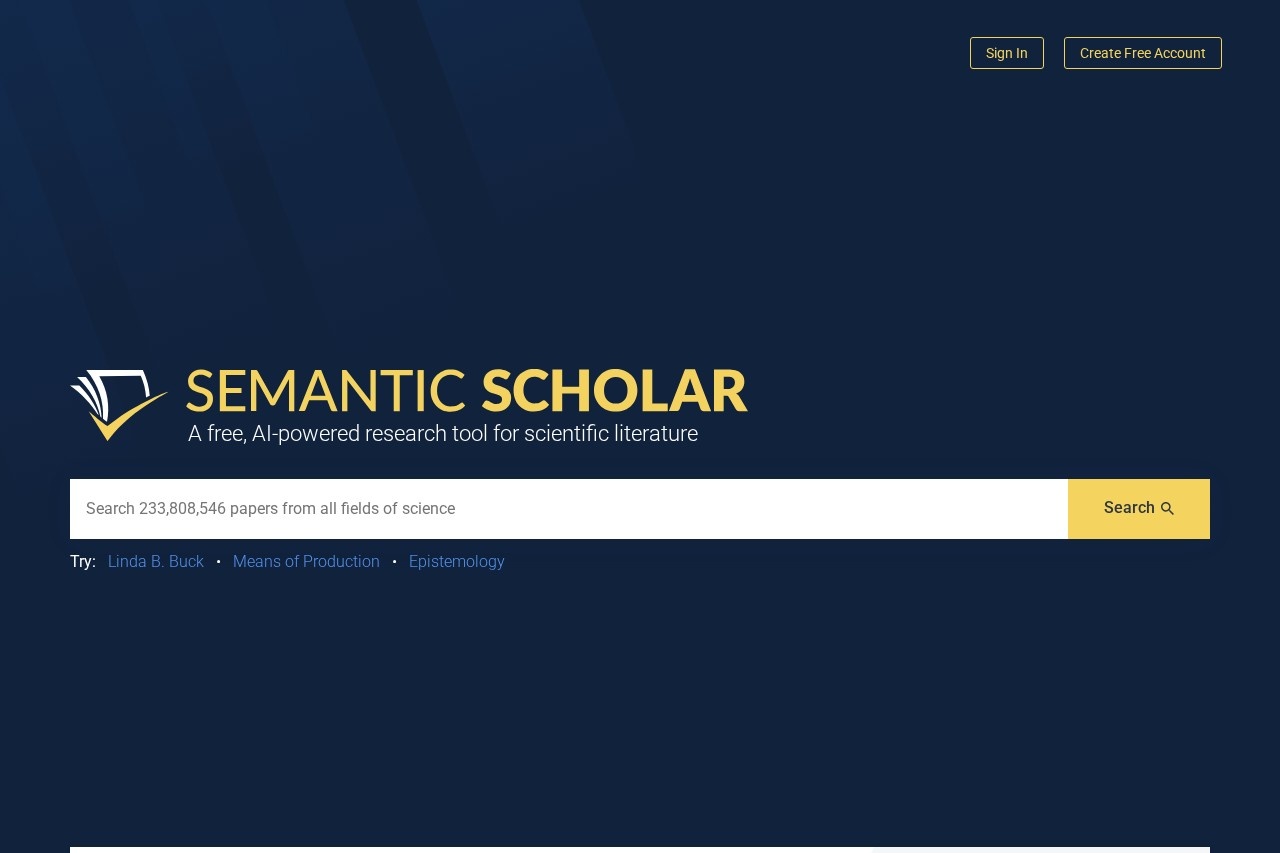
What is Semantic Scholar?
Semantic Scholar is a free, AI-powered research tool for scientific literature. It is built by the Allen Institute for AI. Users employ it to search for and understand academic papers efficiently across all fields of science. The tool applies semantic analysis to help scholars discover relevant research.Application scenarios
Literature Review
A researcher quickly finds foundational and recent papers on a specific topic.
Paper Discovery
A student discovers relevant scientific literature outside their immediate reading list.
Development Integration
A developer builds a scholarly application using the provided API.
Enhanced Reading
A scholar uses the augmented reader to gain deeper context from select papers.
Core Features
Semantic Search
Users can search through a corpus of 233,808,515 scientific papers from all fields.
Author & Concept Search
The search functionality allows direct queries for authors like "Barbara L. Fredrickson" or concepts like "Inheritance Tax."
Semantic Reader (Beta)
Users can try an augmented reading interface designed to make scientific papers more accessible and context-rich.
Developer API
Developers can access an API for paper search to build third-party scholarly applications.
API Enhancements
The API offers improved documentation and increased stability for developers.
Free Access
The core research tool is provided at no cost to the user.
Target users
This tool directly benefits academic researchers, university students, scientists across all disciplines, and developers building applications in the scholarly or educational technology space.How to use Semantic Scholar?
Visit the official website at semanticscholar.org. Use the search bar to enter a query, which can be an author's name, a concept, or a topic. For the augmented reading experience, look for select papers available with the Semantic Reader beta feature. Developers can visit the site to get started with the API for building applications.Effect review
Semantic Scholar provides a substantial, free database for academic discovery, positioning it as a practical starting point for literature searches. The introduction of the Semantic Reader beta suggests a focused investment in improving not just discovery but also comprehension, targeting a known pain point in scholarly work. The availability of a robust API indicates the platform's utility extends beyond individual researchers to the developer community, enabling broader innovation in research tools. For a typical user, the combination of a massive search index and AI-augmented reading features aims to streamline the research process from finding papers to understanding them.Frequently Asked Questions
What is Semantic Scholar?
Is Semantic Scholar free to use?
How does Semantic Scholar use AI?
What types of papers does Semantic Scholar cover?
Can I save papers or create collections in Semantic Scholar?
How does Semantic Scholar differ from traditional academic search engines?
Semantic Scholar - AI Tool Detail
AI-powered research tool by Allen Institute for AI that uses semantic analysis to help scholars discover and understand relevant scientific literature efficiently.
Category:AI Search
Visit Link:https://semanticscholar.org/
Tags:academic research、literature discovery、semantic analysis、AI-powered search、scientific papers