AI Infrastructure2026-09-25 NVIDIA AI Blog
NVIDIA launches DSX Ready for AI factory power
NVIDIA introduced DSX Ready, a qualification program for power and cooling products used in AI factories. The effort addresses a bottleneck that is becoming harder to ignore: as compute density rises, the supporting infrastructure—electricity delivery, cooling, water use, and site planning—can determine how much AI capacity actually gets deployed.
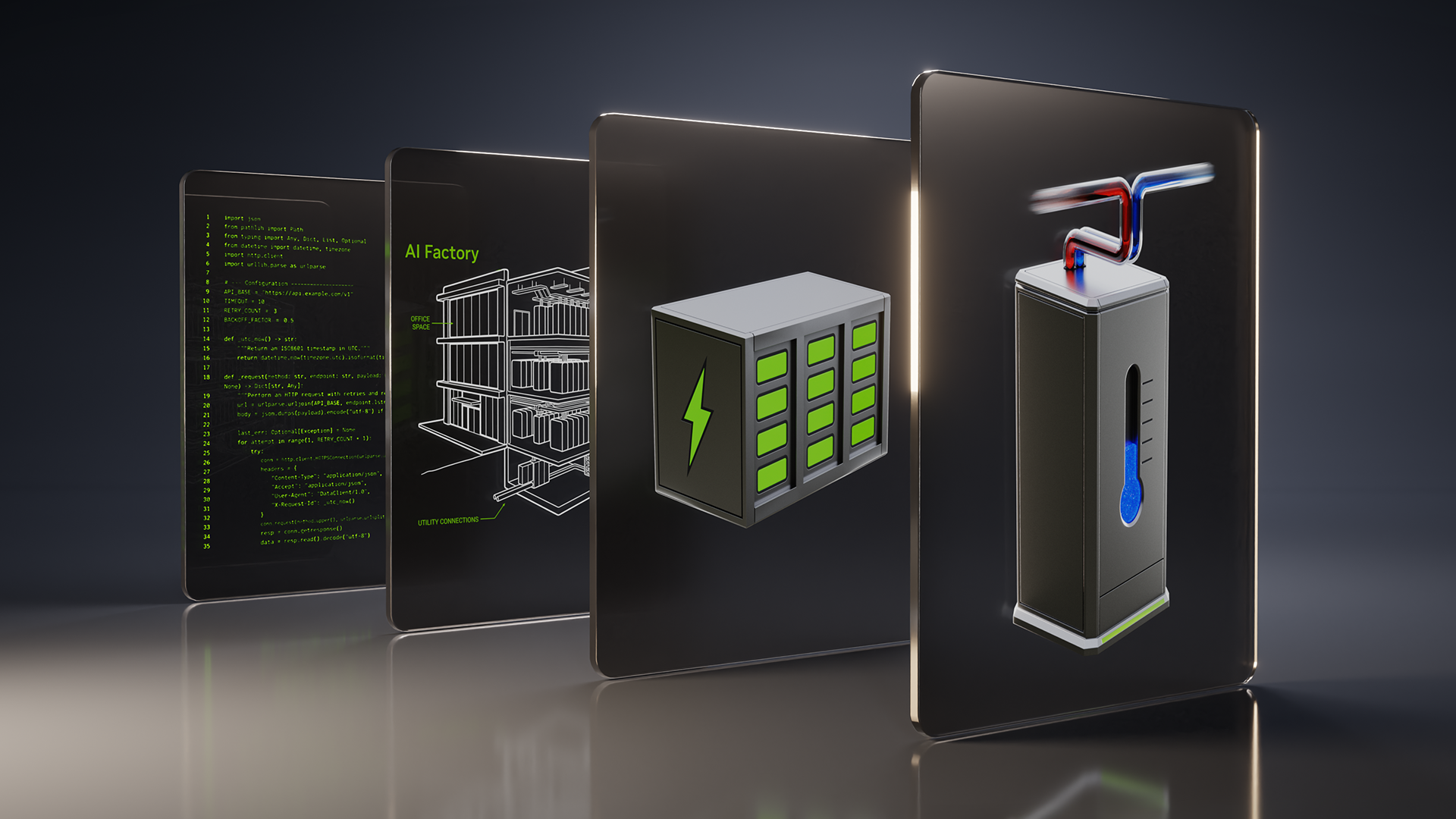
An AI factory is not just rows of servers. It is a tightly coupled system in which GPUs, networking, power distribution, and thermal management must be designed together. If any part is mismatched, expensive compute can sit idle or run below expected performance. DSX Ready aims to validate components against a complete factory design, so operators and builders can choose power and cooling gear that is known to work within NVIDIA's reference architecture. That could reduce integration risk and speed up construction.
The program also reflects growing constraints outside the data center. Grid connections can take years, water supplies are limited in many regions, and local communities are increasingly sensitive to energy and environmental impacts. As a result, AI infrastructure planning is shifting from a pure hardware problem to a resource and site optimization problem. By pre-qualifying products, NVIDIA hopes to help partners turn expensive computing capacity into usable output faster.
For vendors, DSX Ready could become a de facto requirement for selling into large AI projects. For operators, it may simplify procurement but also deepen dependence on NVIDIA's ecosystem. The broader message is that AI factories are industrial facilities, not ordinary server rooms. Their economics depend on power usage effectiveness, cooling efficiency, uptime, and the ability to scale without hitting local limits. DSX Ready is an attempt to standardize that messy layer. Whether it meaningfully eases the power and cooling crunch will depend on adoption, transparency, and whether validated components can keep pace with rapidly changing chip designs.